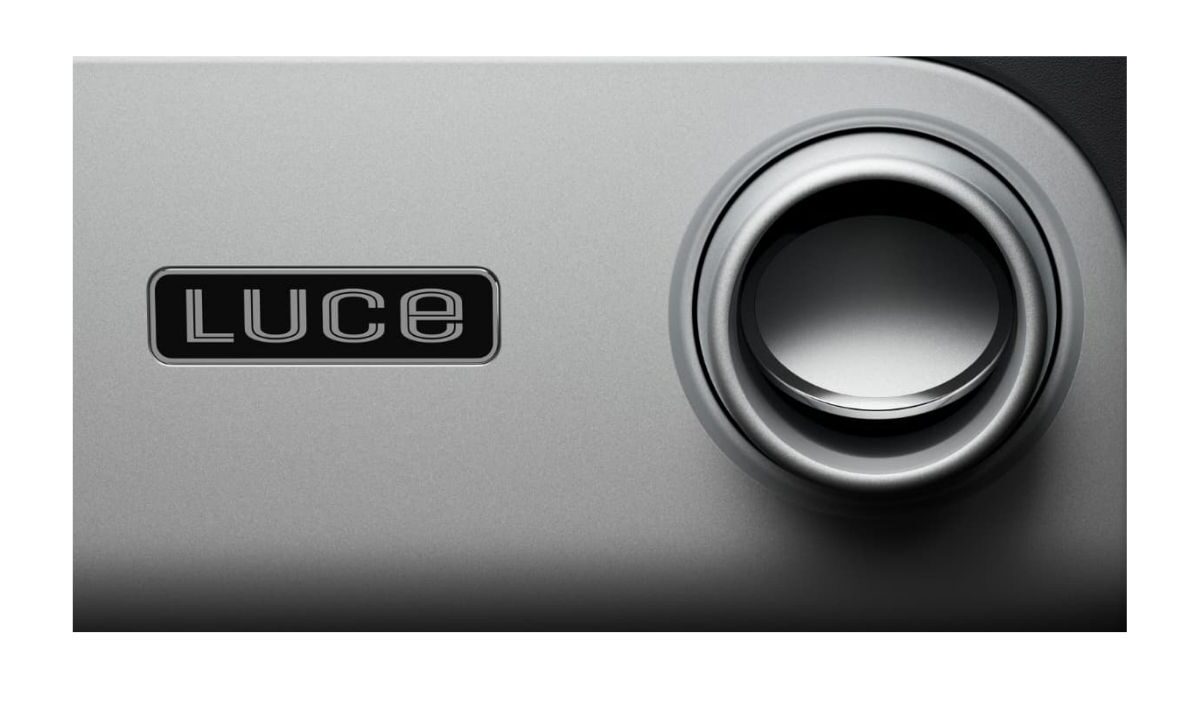
Italian carmaker Ferrari has revealed the name and the interior interface approach for its first electric model, now officially called the Ferrari Luce. For the first time, the maker has opted to have a partial display of their new EV, rather than hosting a traditional grand unveiling- A visible change in Ferrari’s ideology.
Interior
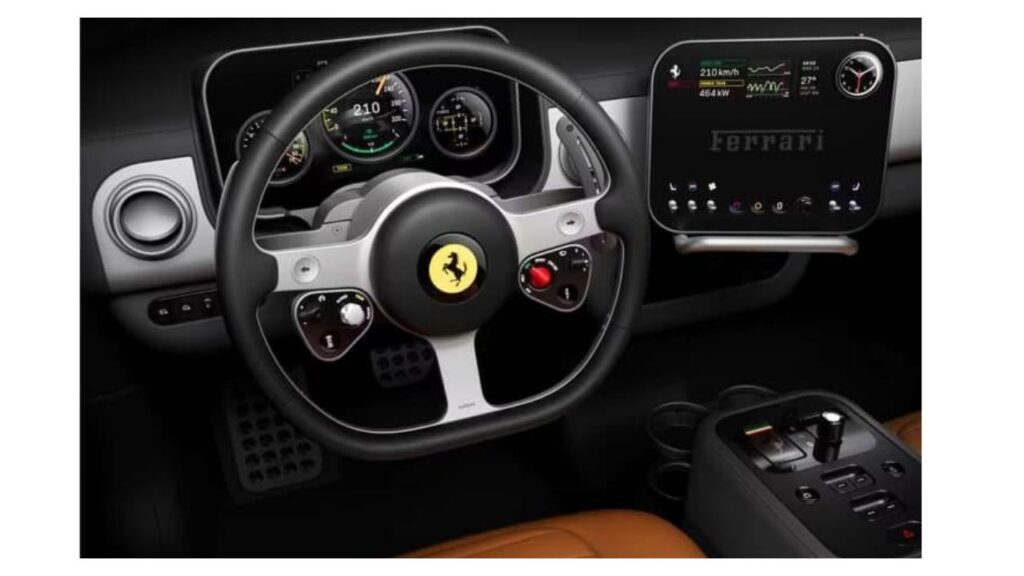
Ferrari developed the Luce’s interior with input from California-based design company LoveFrom, founded by former Apple designer Sir Jony Ive. The new model clearly shifts the brand’s design language. It replaces Ferrari’s traditional cabin layout with a newer approach that prioritizes utility and technology.
Performance figures
Ferrari officially released the car’s specifications last October. The car uses four electric motors that deliver a combined output of up to 986 horsepower in boost mode. Ferrari claims a top speed of over 308 km/h and a 0–100 km/h acceleration time of 2.5 seconds.
Meaning of Luce
The name ‘Luce’, meaning light in Italian, is the confirmed name. The early sneak peek suggests Ferrari is testing public reaction to its EV direction rather than presenting the car through a full-fledged reveal.
Cabin Features
The new cabin combines screens with physical controls instead of relying entirely on touch-based inputs.
Key features include:
- Three-spoke steering wheel with physical buttons
- Digital instrument cluster with layered information layout
- Central touch screen mounted on a movable joint
- Physical buttons for climate control
- A digital key with a screen
- The cabin uses metal and glass for the switches and controls
Physical controls
Ferrari has made the smart choice by keeping physical controls for its core functions, which helps reduce driver distraction and improves usability. However, in practical terms, this claim will still need validation once the production model is officially released and tested.
Ferrari’s New Design Logic
The EVs of today rely hugely on large, full-width screens; Luce uses a combination of digital displays and physical controls. The layout suggests a promising change in design approach without breaking Ferrari’s existing design logic.
Real-world testing of the production model will show how effective this setup is in daily driving.