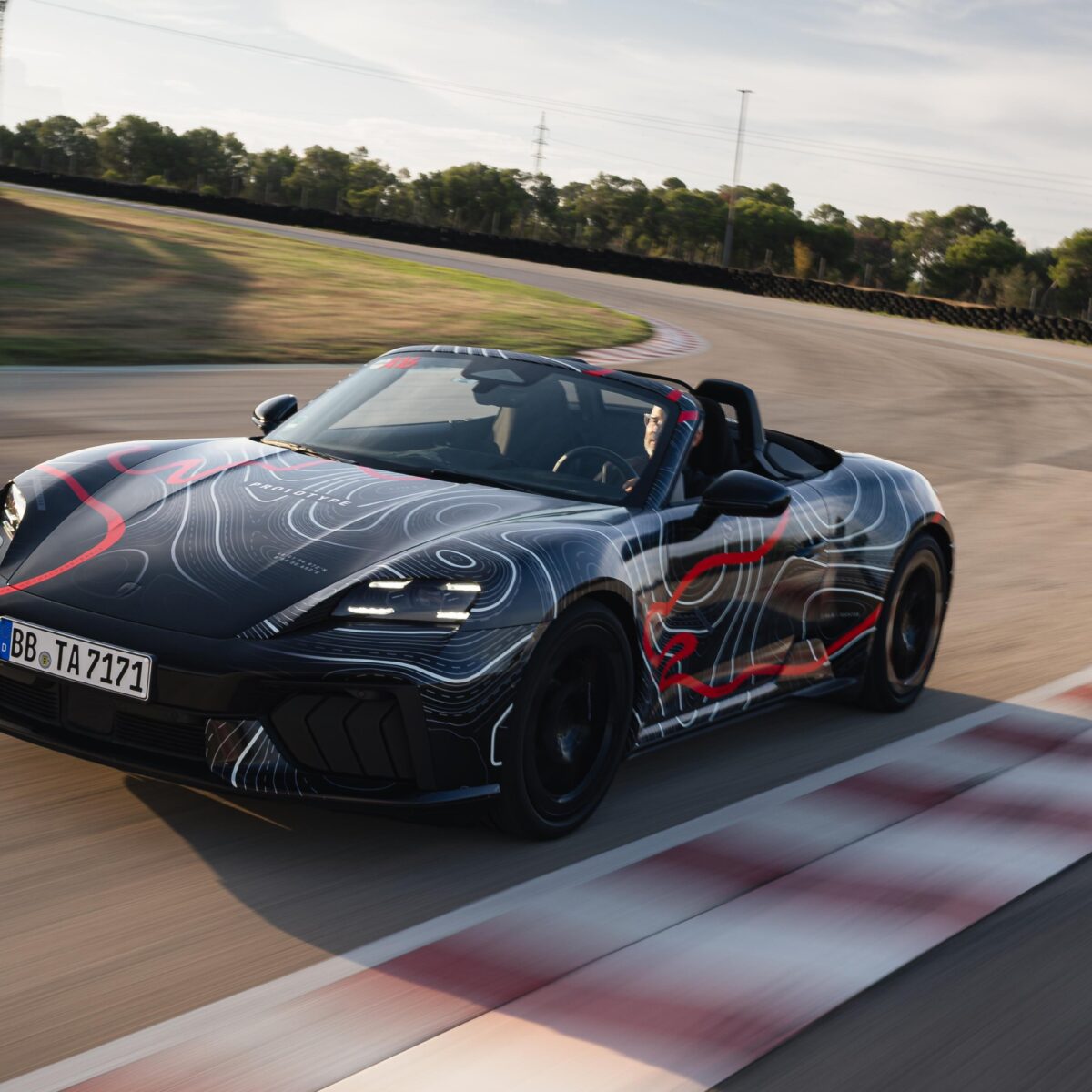
Porsche’s first all-electric 718 Boxster is nearing the end of its development programme, with its world premiere scheduled for the first quarter of 2027. The electric roadster has completed around four million kilometres of testing across more than 20 countries.
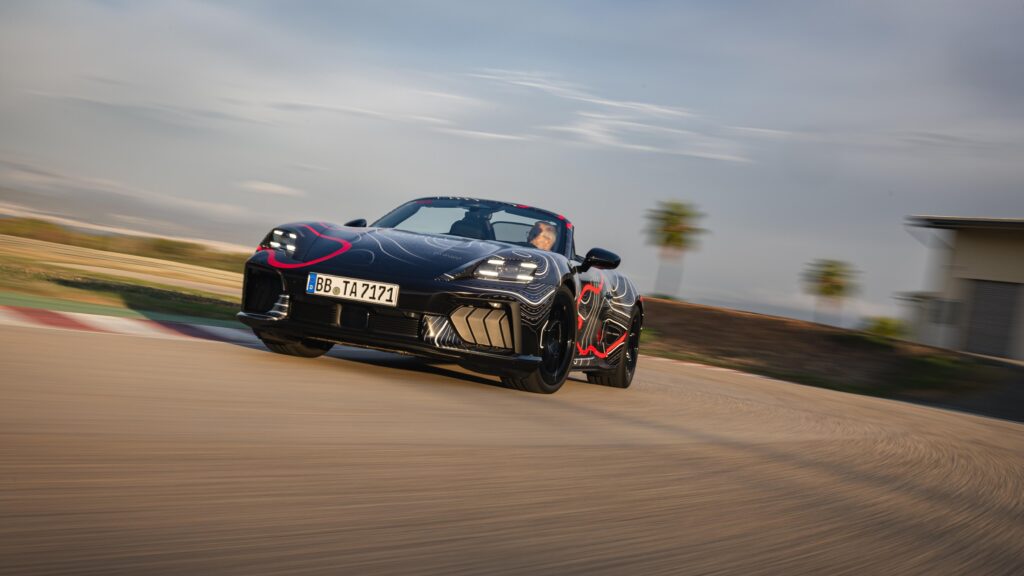
The testing programme covered temperatures ranging from -30°C in Sweden to 51°C in Death Valley. Engineers also tested the car in cities such as Las Vegas, Los Angeles and Shanghai, and evaluated its charging performance using five different standards.
Mid-Engine Feel in an Electric Sports Car
The 718 Boxster uses Porsche’s dedicated E-Core architecture, placing the 800-volt battery directly behind the seats, where the combustion engine would normally sit. This allows for a low seating position and a 40:60 front-to-rear weight distribution, similar to a traditional mid-engine sports car.
Other key details include:
- Rear-wheel drive across all variants.
- Chassis components derived from the Porsche 911.
- Rear-axle steering available for the first time on a 718 Boxster.
- PTV+ electronically controlled limited-slip differential.
Performance and E-Shift Technology
Porsche says the top-spec electric 718 Boxster will be the most powerful version yet. It will accelerate from 0-100km/h in under three seconds and reach a top speed of over 250km/h.
All variants will feature the E-Shift system, which simulates a seven-speed PDK gearbox. Drivers can choose automatic gear changes or use steering-wheel paddles for manual shifts. The system also recreates the six-cylinder boxer engine sound of the 981-generation Boxster GTS. When E-Shift is switched off, the paddles control three levels of regenerative braking.
Also read: https://fly-wheel.com/mini-india-announces-first-pickleball-league-across-10-cities/
Final Take
Porsche aims to retain the mid-engine character of the 718 Boxster in its electric successor. The dedicated battery layout, rear-wheel drive and simulated gear changes are among its key features. The production model will be built in Stuttgart-Zuffenhausen, with its global debut planned for early 2027.