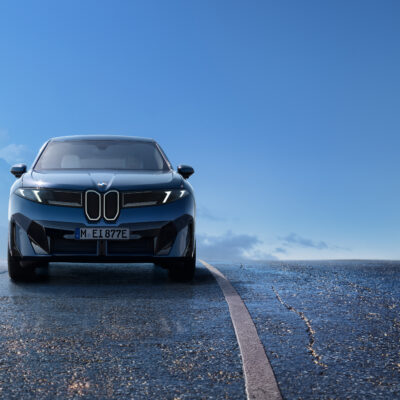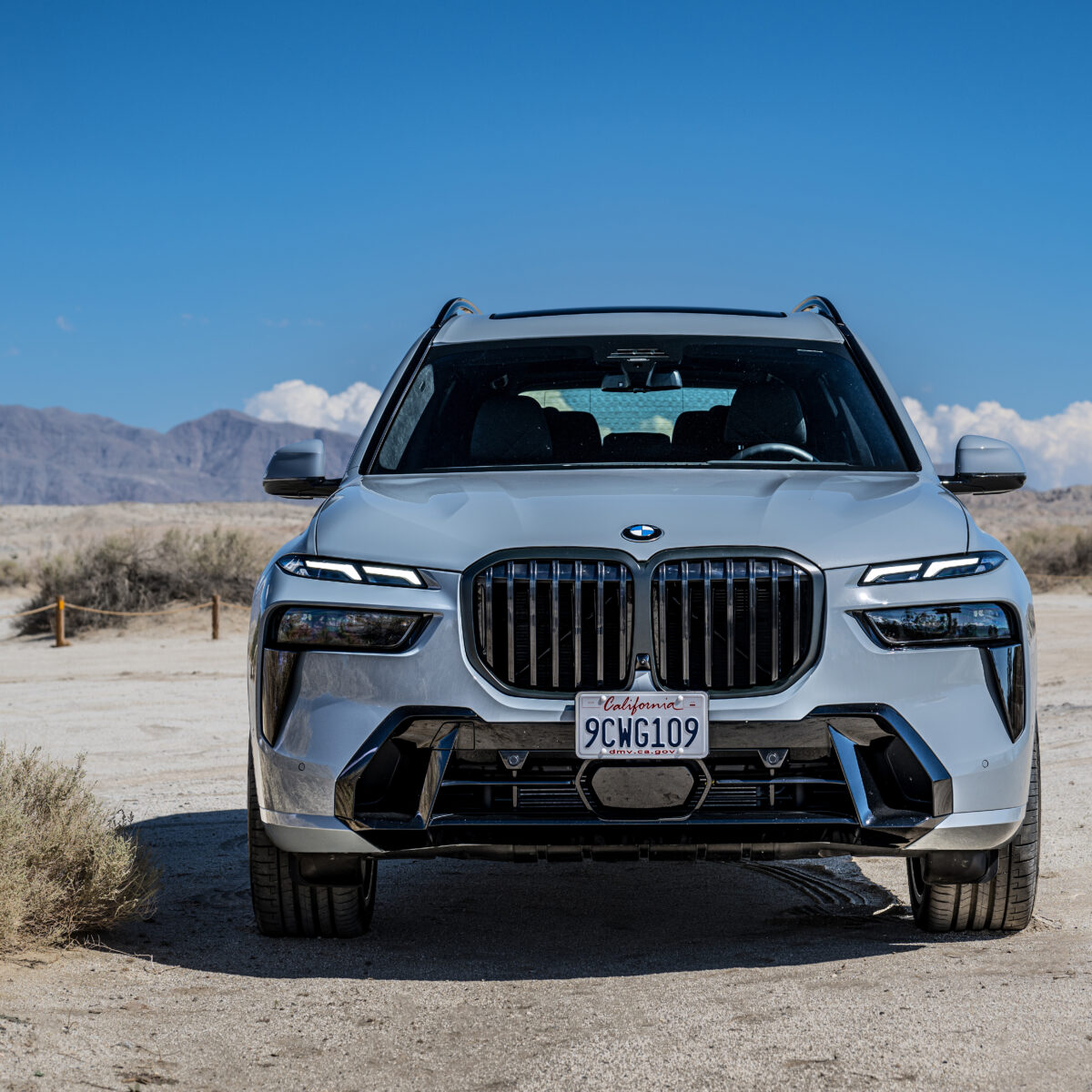
The BMW X7 continues to stand as the brand’s flagship luxury SUV, sitting above the rest of BMW’s SUV lineup. We tested the latest 2025 version over a few days to understand how it performs as both a luxury family mover and a driver-focused machine.
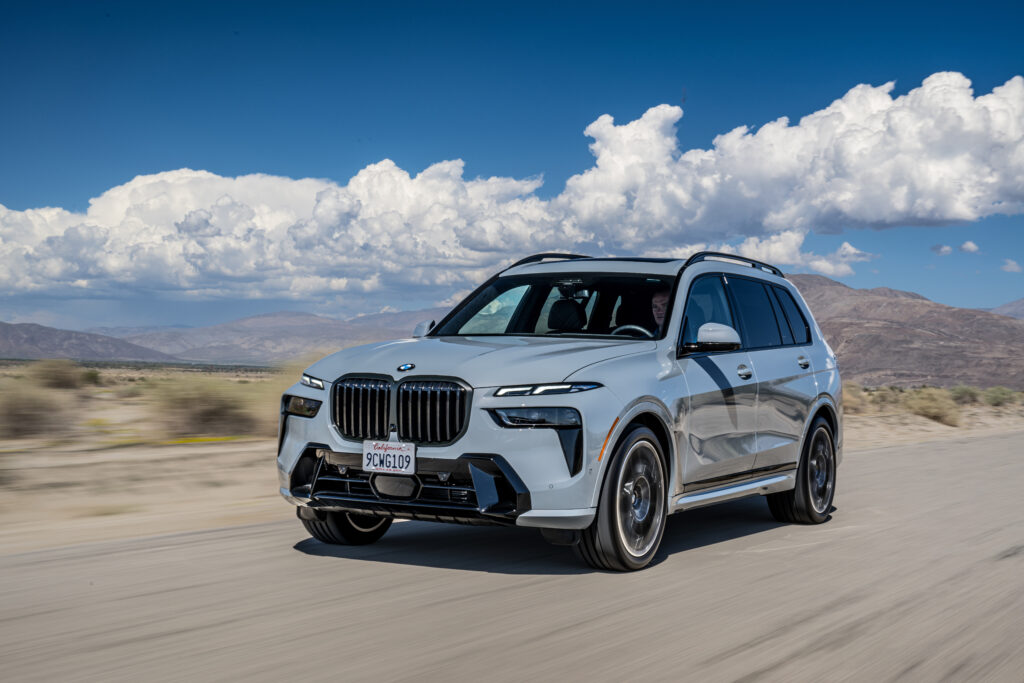
Design and Road Presence
Design plays a big role in this segment, and BMW has taken a bold approach.
- Large kidney grille, now more prominent than before
- Split headlamp setup with DRLs positioned above
- Strong hood lines and muscular bumper design
- M Sport styling elements add a sportier edge
From the side:
- Clean surfaces with minimal character lines
- Large glass area improves visibility
- 21-inch wheels (22-inch optional)
- Long proportions (5.2 metres)
At the rear:
- Familiar L-shaped tail lamps
- Dual functional exhausts
- Split tailgate for practicality
The design may be subjective, but in person, the size and presence are undeniable.
Interior and Features
Inside, the X7 focuses on combining luxury with BMW’s driver-oriented layout.
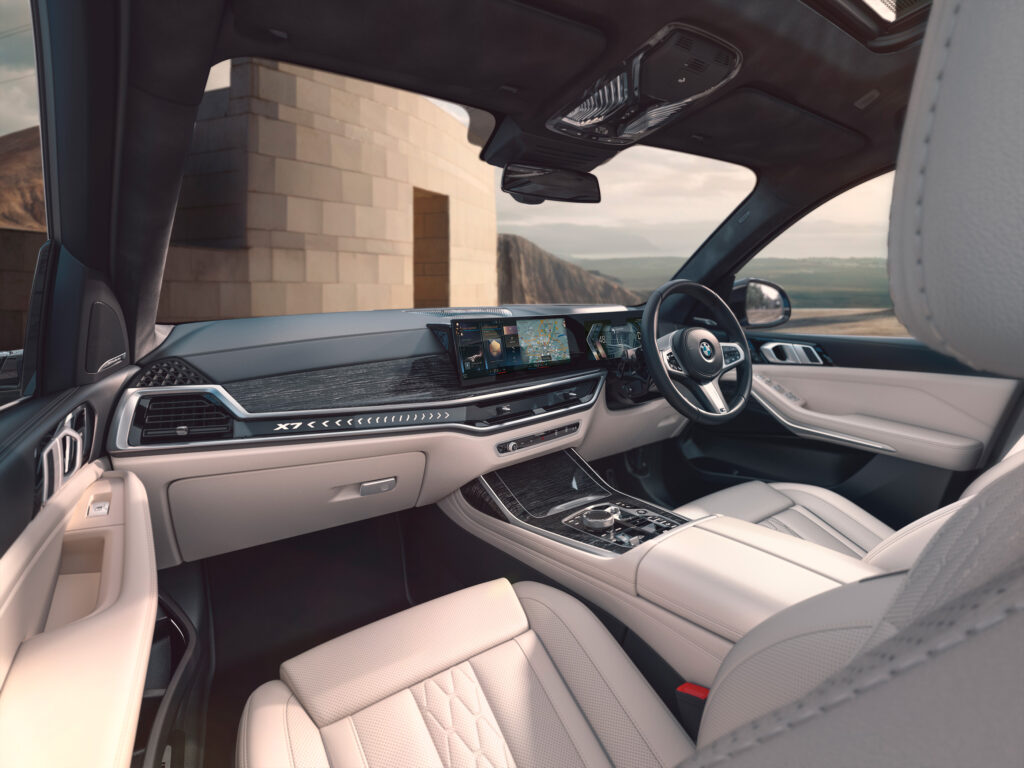
- Curved dual-screen setup (instrument cluster + infotainment)
- Premium materials: leather, wood, brushed aluminium
- Crystal-like finish on the gear selector and controls
- Panoramic sunroof, including a section for the third row
Key features:
- Gesture control infotainment system
- Head-up display with customizable layouts
- Wireless charging and multiple USB-C ports
- Harman Kardon sound system
Some controls are now integrated into the screen, which takes time to get used to.
Seating and Space
The X7 is available in both 6 and 7-seat configurations. The test car was a 6-seater with captain seats.
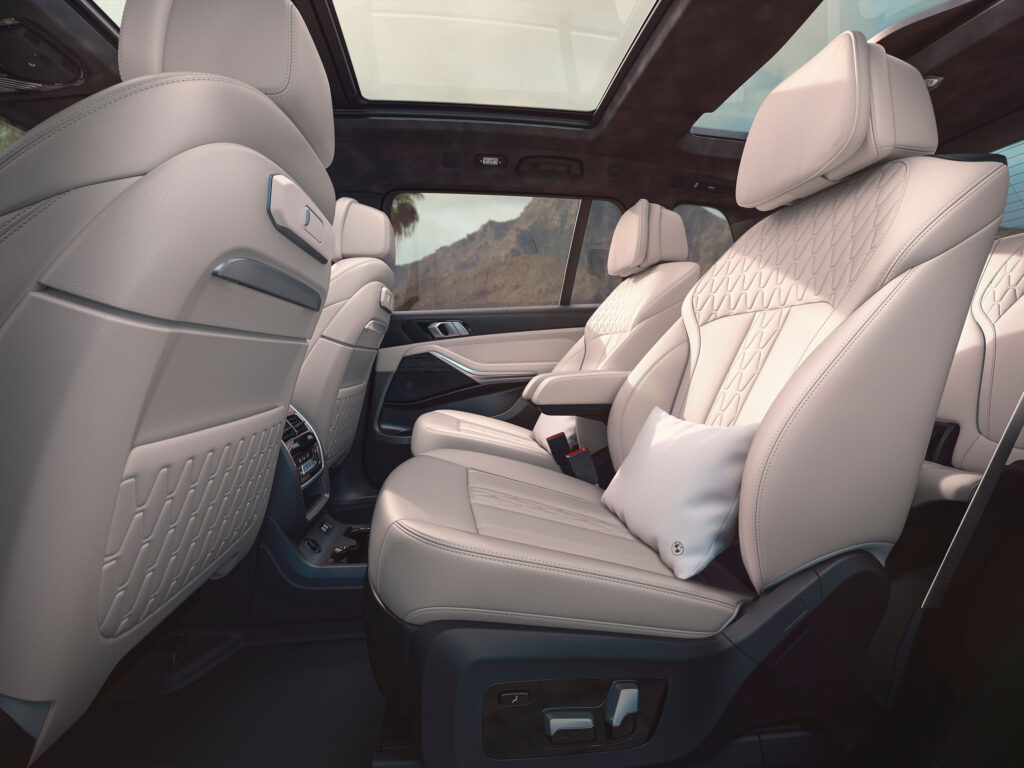
- Second-row captain seats offer strong support and comfort
- The recline function allows a relaxed seating position
- Soft cushions and adjustable armrests
- Good legroom and cabin space
Third row:
- Best suited for kids or short journeys for adults
- Dedicated sunroof section, a rare feature in this segment
Boot space is flexible:
- Electrically foldable third-row seats
- Split tailgate adds usability
Engine and Performance
BMW offers both petrol and diesel options, both using inline-six engines.
- Petrol: 3.0L inline-6, 375 hp, 520 Nm
- Diesel: 3.0L inline-6, 335 hp, 700 Nm
- 8-speed automatic gearbox
- xDrive all-wheel-drive system
Performance highlights:
- Strong acceleration, especially in petrol
- Smooth and refined power delivery
- Power is always available when needed
Ride and Driving Experience
This is where the X7 stands out in the segment.
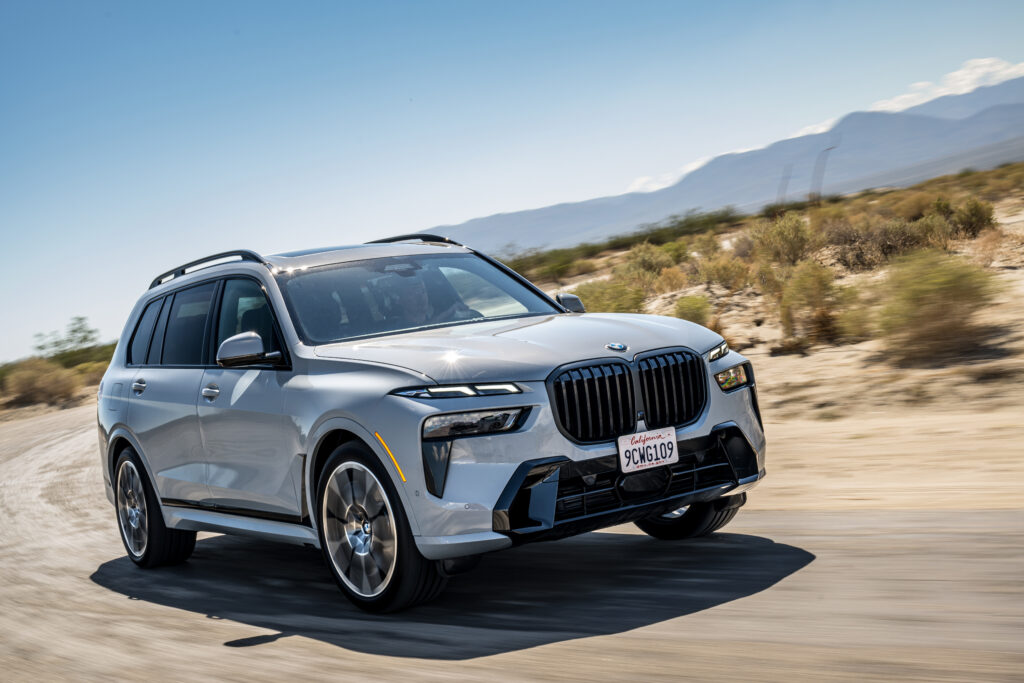
- Air suspension delivers a “floating” ride feel
- Excellent refinement: low road, wind, and tyre noise
- Handles its size well, even in corners
- Steering remains precise for a large SUV
Driving modes:
- Comfort – best balance for daily use
- Sport – sharper throttle and response
- Eco – focused on efficiency
Observations from our test:
- Comfort mode is ideal for most situations
- Sport mode adds noticeable responsiveness
- Slight wind disturbance at high speeds when passing large vehicles
Efficiency
- Diesel: claimed 16.5 km/l (more realistic in real-world use)
- Petrol: claimed 14 km/l, but lower in real driving
As expected, petrol prioritises performance over efficiency.
Competition
The BMW X7 competes with:
- Mercedes-Benz GLS
- Range Rover
- Toyota Land Cruiser
Compared to rivals:
- More driver-focused than most
- Strong balance between comfort and dynamics
- Offers a slightly sportier character
Verdict
After spending time with it, the BMW X7 comes across as one of the most balanced luxury SUVs in its class.
- Combines luxury, space, and driving dynamics
- Strong engine options with refined performance
- Comfortable for families, yet engaging to drive
It may not be the softest or most feature-loaded in every aspect, but as an all-rounder, the X7 delivers a compelling package.