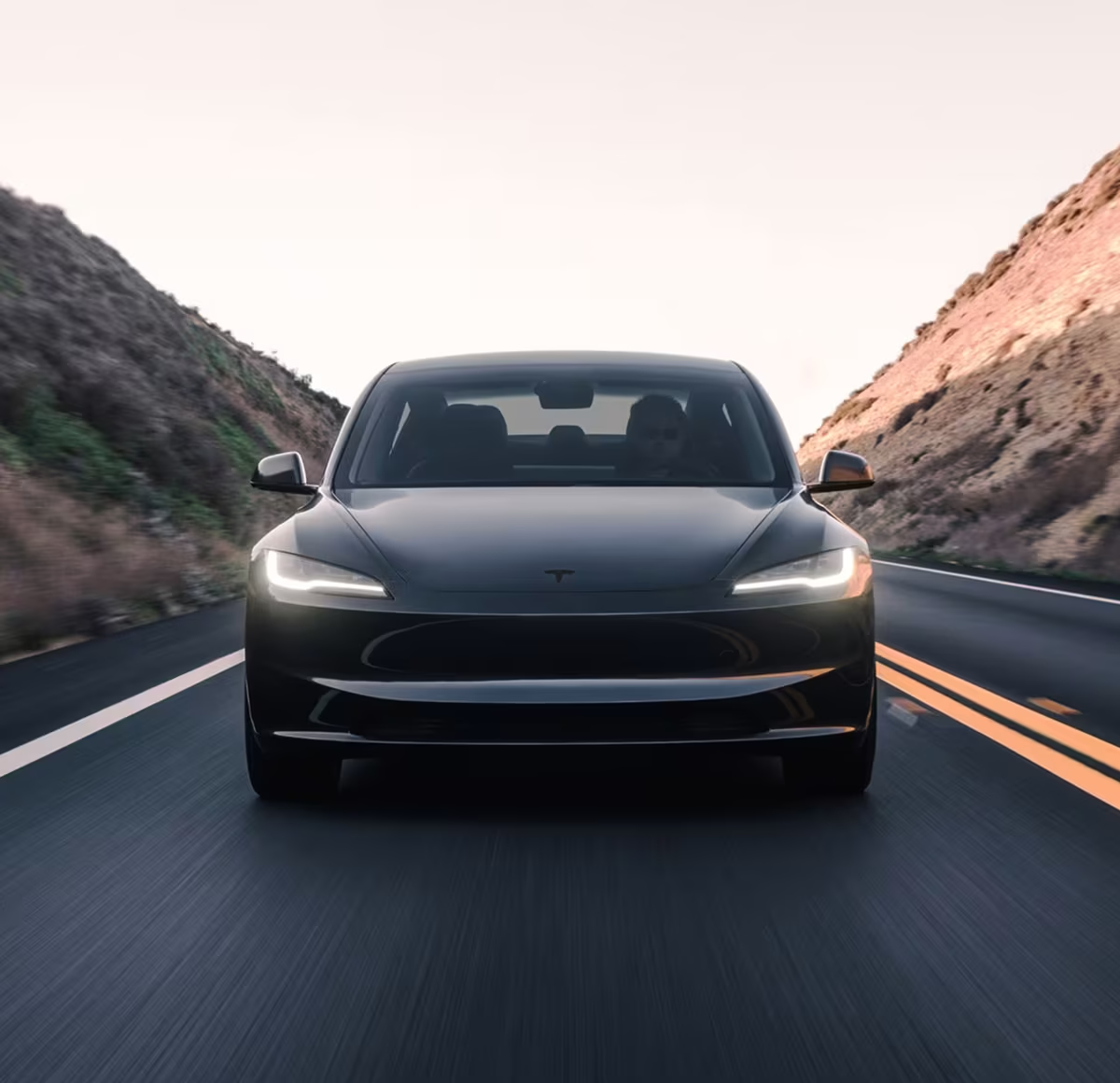
We drove the Tesla Model 3 Long Range dual-motor in Dubai, and in many ways it feels like the car that put electric mobility on the map, not just for enthusiasts, but for everyday buyers who simply wanted something smarter. The question going in was straightforward: Does the Model 3 still hold up, and what does it actually mean for markets like India, where Tesla is preparing to arrive?
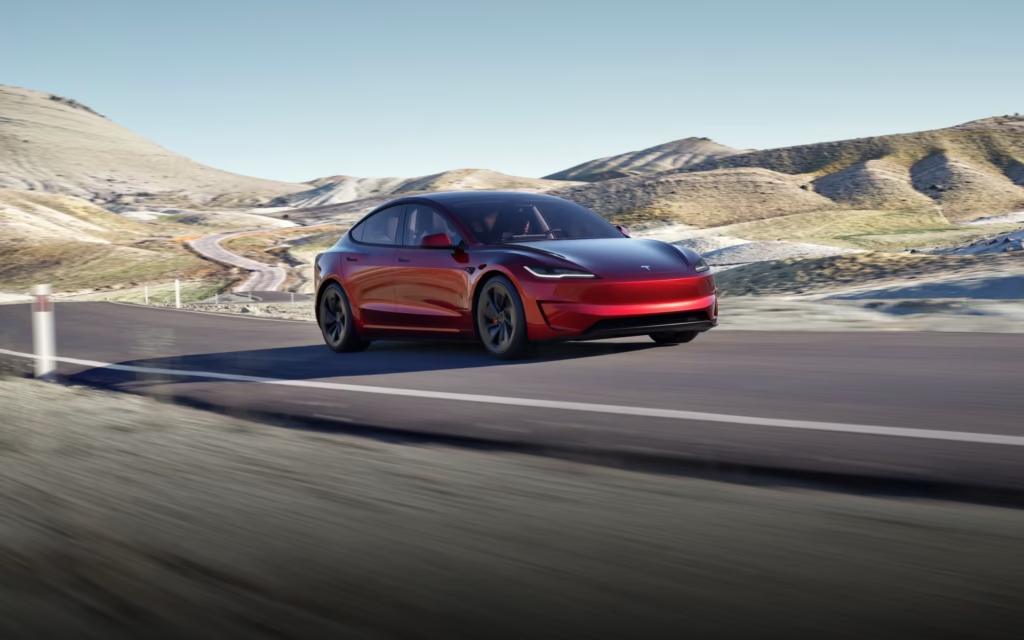
The short answer is yes, with some honest caveats worth knowing.
A Brief History Worth Knowing
Tesla didn’t start as a car company in the traditional sense.
- Founded by Martin Eberhard and Marc Tarpenning, both e-book hardware manufacturers
- The idea came after Martin drove the tZero electric car, built by AC Propulsion
- Key insight: replace the lead-acid battery with lithium-ion cells, the same technology in laptops
- The name Tesla was inspired by inventor Nikola Tesla
- Elon Musk joined as an investor in 2004, when the company needed funding
- The first car was the Roadster, based on the Lotus Elise chassis, which was officially launched in July 2006
- The Model S followed in 2012, a sedan that drove like a sports car, with 588 hp and 0–100 in 2.3 seconds
- Model X arrived in 2015, famous for its Falcon-wing doors and SUV practicality
- Model 3 was unveiled in 2016 and had 325,000 reservations within weeks
- By 2018, it had outsold the Toyota Corolla, the world’s best-selling car at the time
Tesla’s model lineup spells out S, 3, X, and Y, which is exactly what they intended. The Model 3 sits at the entry point of that range, the equivalent of a BMW 3 Series or Mercedes C-Class within the Tesla family.
Design: Minimalism as Identity
The Model 3 has a face unlike anything else on the road, and that’s entirely deliberate.
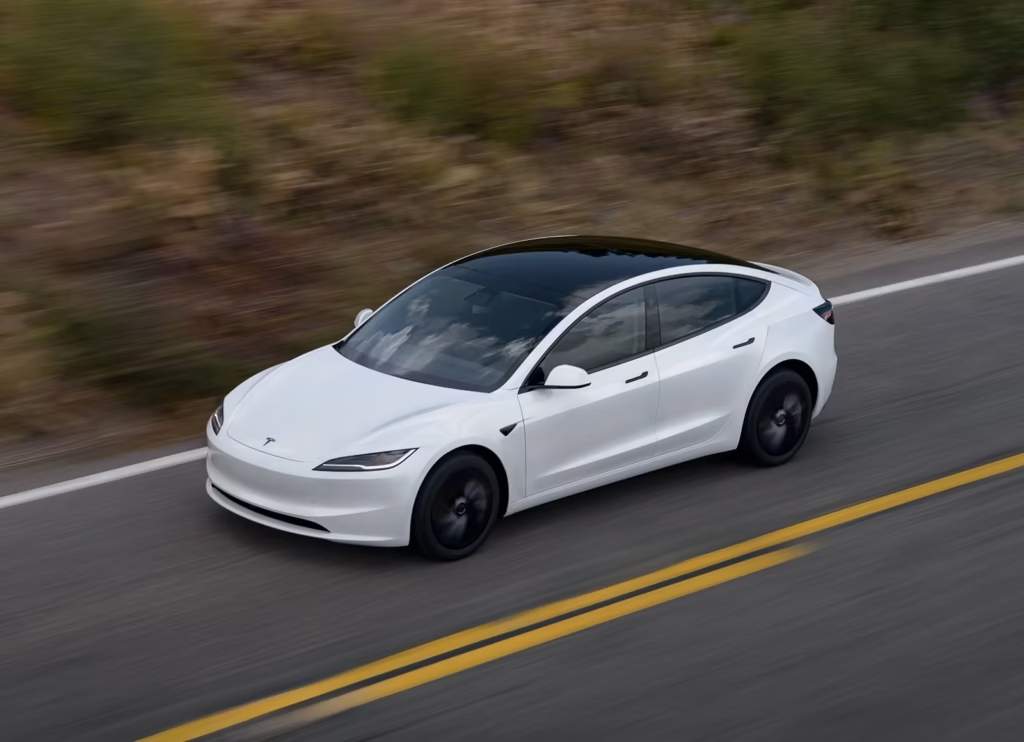
- No grille, no vents, no traditional front end, just a clean, aerodynamic nose
- L-shaped LED headlamps carry the same DNA across all Tesla models
- Fully covered aerodynamic wheels reduce drag and improve efficiency
- Frameless doors front and rear give it a cleaner, more premium feel
- Full glass roof runs from windscreen to rear, not a sunroof, an entire panel of glass
- Flush door handles sit flush with the body for aerodynamics
- Three cameras mounted around the exterior feed the autonomy system
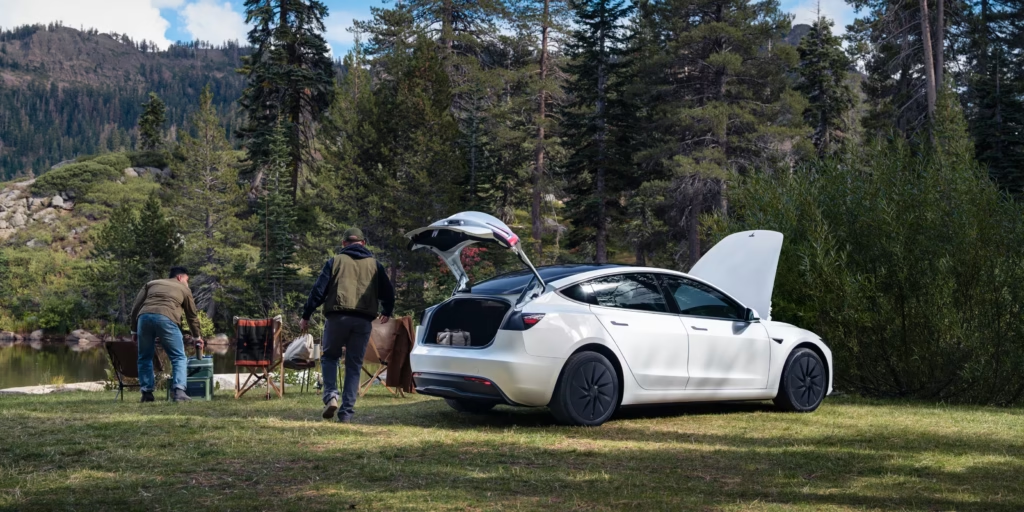
- Boot opens properly, with a large, usable boot well underneath
- Simple rear design with clear LED strip tail lamps and the Tesla logo, nothing else
It’s a sophisticated design precisely because of what it leaves out. Every unnecessary element has been removed, and the result is a car that looks like it came from ten years in the future.
Interior: Screens, Simplicity, and a Card Key
Step inside, and the minimalism continues, but here it demands a small adjustment period.
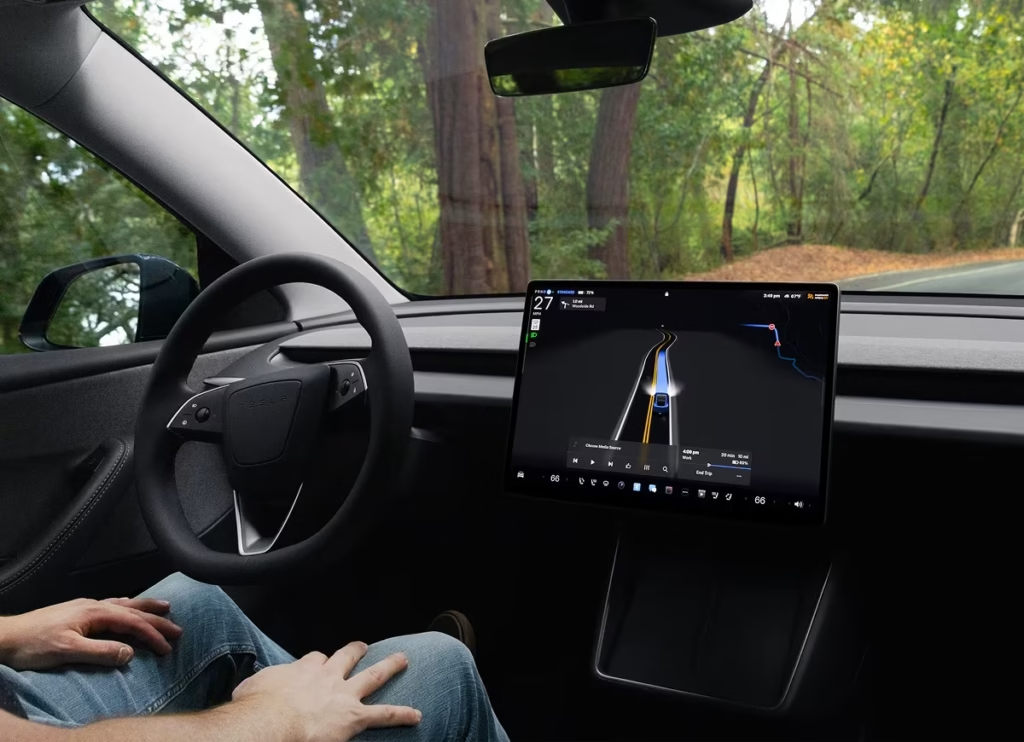
- Single large central touchscreen controls everything: navigation, audio, climate, vehicle settings
- No traditional instrument cluster, all driving information comes through the same screen
- White premium seats throughout; comfortable, though front thigh support feels slightly lacking
- Rear seats sit under a full glass roof panel, airy and spacious in feel
- Rear legroom is tighter than expected; feet need to be tucked under the front seats slightly
- Hidden air vents run along a single horizontal line across the dashboard
- Glossy black trim throughout, clean, but a fingerprint magnet
- 360-degree camera system displayed on screen with impressive accuracy
- The key is a credit card-sized card; place it on the centre console to enable drive mode
- Phone-as-key works seamlessly; the physical card is essentially a backup
The interior rewards buyers who are comfortable living inside a technology product. Those who prefer tactile buttons and traditional controls will need time to adjust.
Performance: The Reason People Buy Tesla
This is where the Model 3 makes its case most convincingly, and most immediately.
- Dual-motor all-wheel drive setup
- Long Range variant claims 657 km on a full charge
- 0–100 kmph in 3.3 seconds in this trim level
- Throttle response is instant, no lag, no hesitation, just immediate forward motion
- Power delivery is linear and relentless in a way that internal combustion simply cannot replicate
Key impressions from our drive:
- Acceleration pulls hard and clean with zero drama at the pedal
- Refinement has improved noticeably over earlier Tesla models; road noise and wind noise are both well controlled
- Motor noise that was previously audible has been significantly reduced
- Riding over bumps and rough surfaces is more composed than before
- Rattle and vibration issues present in older models have been largely resolved
- Steering is light and precise, not exciting, but always confident
- Lane keeping assist works accurately, reacting quickly and correctly to road markings
Having driven the Porsche Taycan after earlier Teslas, the Model 3 doesn’t quite match that car’s driving feel. But for its price point and category, the performance on offer is genuinely impressive, and surprisingly refined.
Range and Charging: Honest Numbers
The owner of this particular car uses it primarily for Dubai–Abu Dhabi trips rather than daily commuting, and gave us a candid picture.
- Claimed range: 657 km
- Real-world highway range is noticeably lower due to recalibration at speed
- City driving returns better efficiency thanks to regenerative braking on every stop
- Using more autonomous features increases battery consumption, similar to data usage on a phone
- Home charging via standard outlet: 22 hours for a full charge
- With a wall-mounted fast charger, around 7 hours
- Public fast-charging infrastructure in Dubai is still developing, and Abu Dhabi coverage is limited
- For regular short commutes, home charging overnight handles everything easily
The range story is good for city use and manageable on highways, but the charging infrastructure story is still catching up, in the UAE and significantly more so in India.
The Autonomy Question
Tesla’s autonomous features are the other major selling point, but there’s a catch that matters.
- Lane keeping, object detection, and surrounding vehicle mapping all function accurately
- Cameras read road markings with impressive precision, even in imperfect conditions
- Full self-driving features are not legally permitted in the UAE or in India
- Only lane-keeping assistance is currently active and usable in this market
- When autonomous features are used heavily, battery consumption rises noticeably
The autonomy hardware is clearly capable. Whether the legislation catches up, in India especially, remains an open question. Until it does, buyers are paying for a system they cannot fully use.
Verdict
The Model 3 doesn’t try to be a conventional car. It redefines what a car is supposed to be.
- Performance at this price point is difficult to match from any competitor
- The technology ecosystem is the most mature in the EV segment
- Refinement has taken a genuine step forward from earlier Tesla generations
- Charging infrastructure remains the most important practical limitation
When Tesla arrives in India, the product itself won’t be the question. The charging network, the service ecosystem, and how the autonomy regulations develop are the real unknowns. The car is ready, but the market needs to catch up.