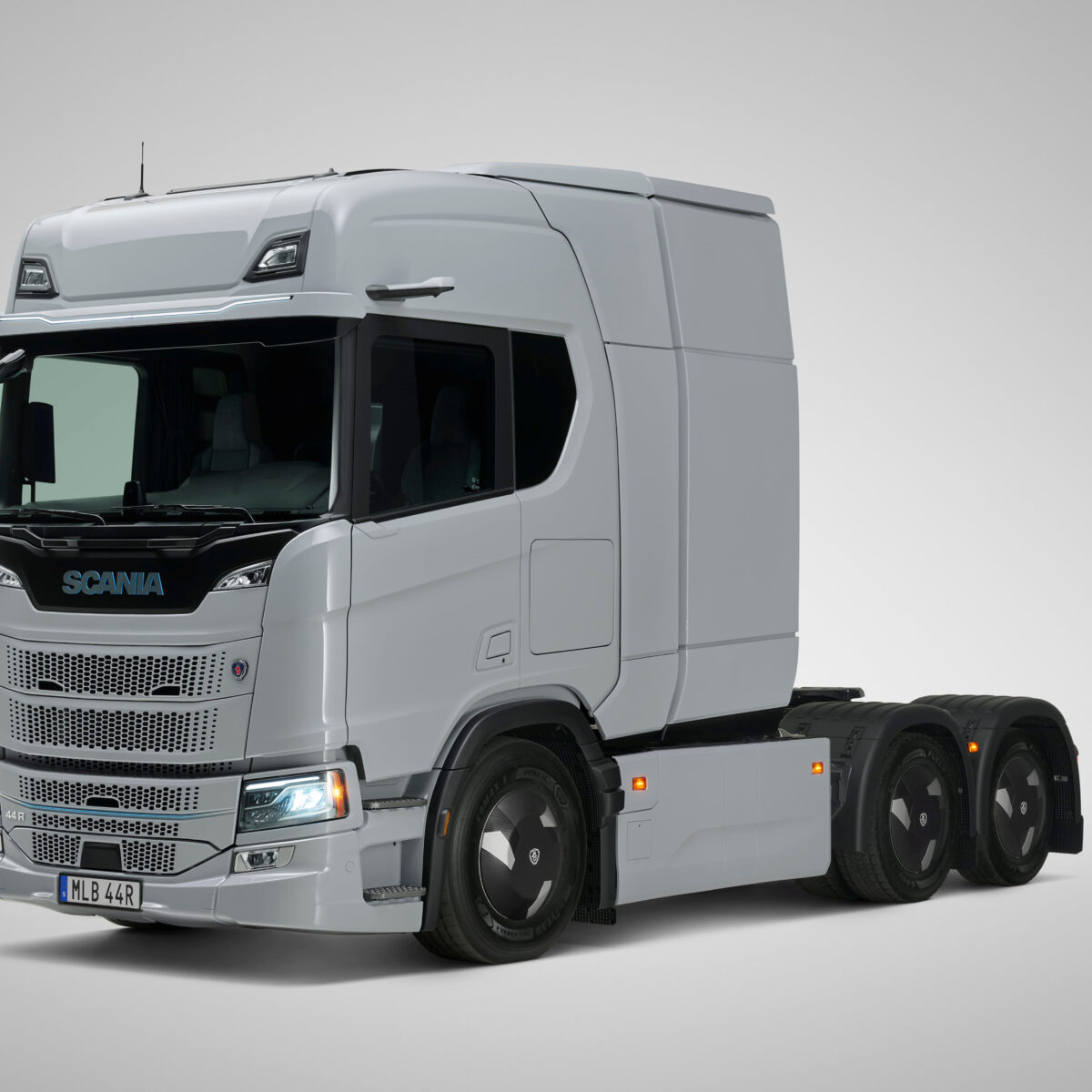
Scania has introduced a new electric truck configuration aimed at making long-haul transport more practical. The setup combines increased battery capacity, Megawatt Charging System (MCS) support, and a revised vehicle configuration to deliver up to 720 km of range.
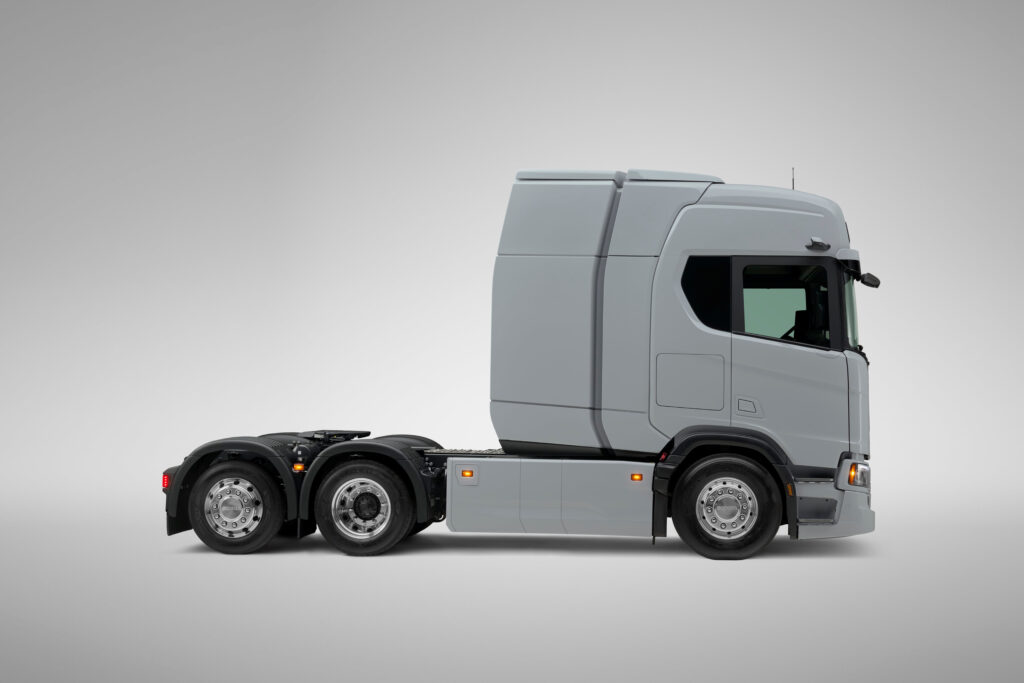
The additional battery capacity is made possible by mounting battery packs behind the cab alongside the existing chassis-mounted and under-cab batteries. Scania says this allows operators to balance range, payload and charging requirements for demanding long-distance routes.
More Batteries, Longer Range
A typical configuration uses two MP20 battery packs mounted behind the cab, adding around 356 kWh of installed capacity.
Key figures include:
- Up to 720 km electric range
- Around 356 kWh additional capacity behind the cab
- Two MP20 battery packs in a typical configuration
- Support for MCS charging
- Selected 6×2*4 long-haul tractor configurations
- Compatibility with standard European trailer combinations
Longer Without Losing Flexibility
The battery-behind-cab layout works with Scania’s IVD (Increased Vehicle Dimension) front, allowing selected 6×2*4 tractor-trailer combinations to exceed the usual 16.5-metre total vehicle length.
The setup is intended to retain practical trailer compatibility and turning performance while providing the additional space required for the batteries.
Improved Efficiency
Scania says the IVD front can also reduce energy consumption by up to 3 percent, depending on the specification and operating conditions. The company says reducing aerodynamic drag becomes particularly important for electric trucks, where energy consumption directly affects driving range.
MCS charging is another key part of the system, allowing larger battery packs to be recharged during planned breaks rather than relying solely on overnight charging.
Also read: https://fly-wheel.com/2027-kawasaki-vulcan-s-launched-at-%e2%82%b98-23-lakh/
Final Take
Scania’s approach focuses on combining battery capacity, vehicle dimensions, and charging infrastructure rather than treating range as a standalone target. With up to 720 km of range and MCS charging, the configuration is designed specifically around the practical requirements of long-distance electric trucking.