India has taken a big step towards smoother highways. The country’s first barrier-free toll system is now live at the Chauryasi Toll Plaza on NH-48 in Surat, Gujarat.
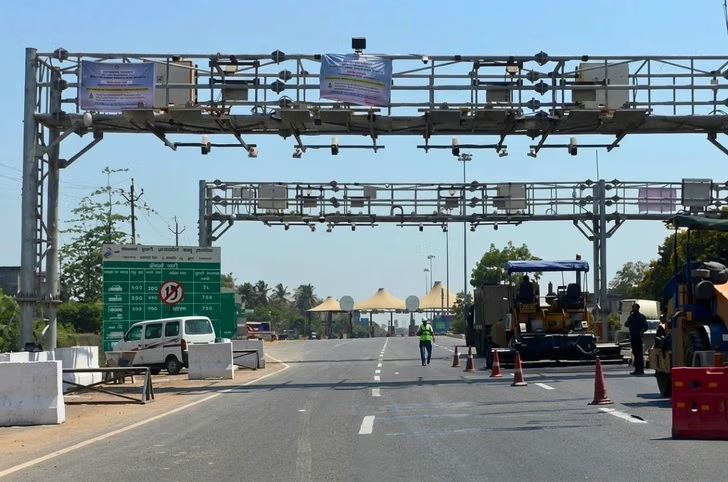
The idea is simple: cars don’t have to slow down or stop anymore. You drive through, and the toll is deducted automatically.
What’s Changed
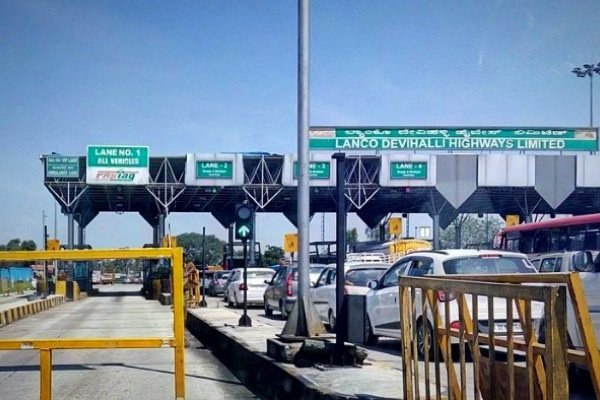
Until now, toll plazas in India have used physical barriers. Vehicles had to slow down, wait, and then move once the payment was done.
With this new system, that changes completely.
- No toll booths or barriers
- No stopping or slowing down
- Vehicles can pass at highway speeds
The system is part of India’s move towards fully barrier-free tolling by 2026.
How It Works
The technology behind this is called Multi-Lane Free Flow (MLFF).
Instead of booths, there’s an overhead structure on the highway that does everything.
- RFID sensors read your FASTag
- Cameras scan your number plate using ANPR
- Toll is deducted automatically
If your FASTag is not working, the system still identifies your vehicle through the number plate and sends a notice to the owner.
Why It Matters
This may sound like a small change, but it can make a big difference.
- Less traffic congestion at toll points
- Faster travel times
- Better fuel efficiency
- Smoother highway experience
Anyone who has spent time waiting at toll plazas will understand how useful this could be.
What’s Next
The government has said it plans to make tolls completely barrier-free across India by the end of 2026.
If that happens, this system could soon become the norm on highways across the country.
What does this mean?
This is a small change on paper, but it could make everyday highway travel much smoother. If it works reliably at scale, long queues at toll plazas could soon become a thing of the past.