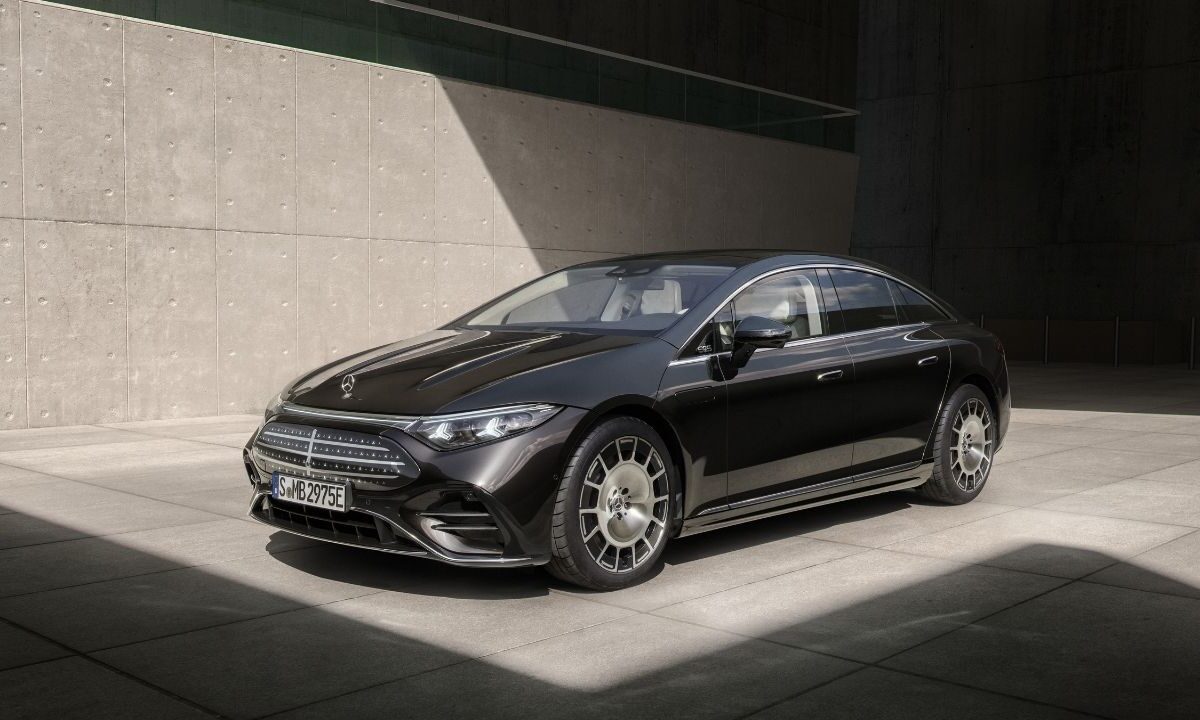
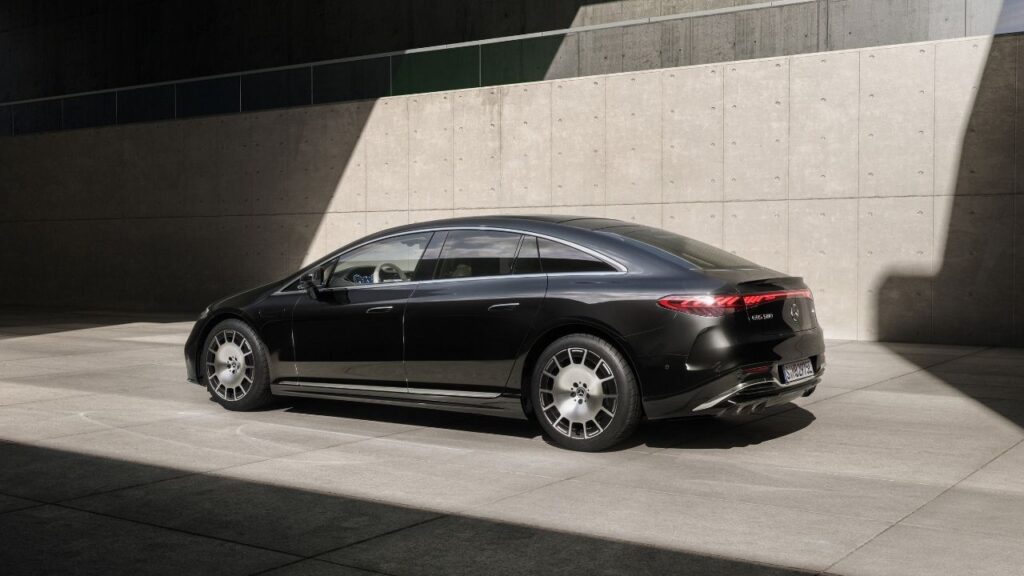
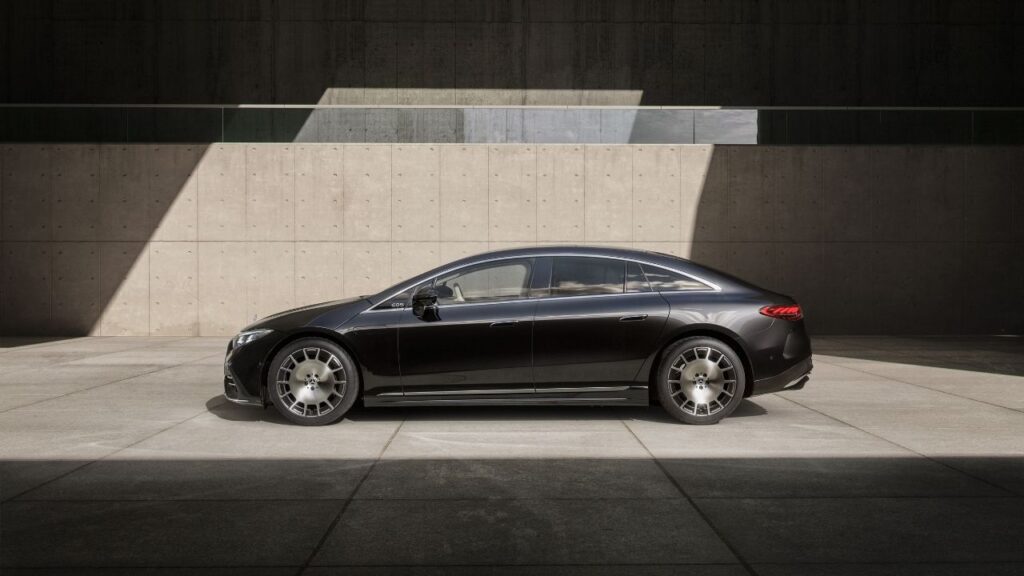
Mercedes-Benz has officially unveiled the facelifted EQS, marking a significant leap in electric range, charging speed, and automotive technology. Now featuring a next-generation electric architecture and the debut of steer-by-wire technology. The 2026 EQS solidifies its position as the brand’s flagship electric saloon?
Performance and Efficiency: The 900km Frontier
The headline achievement for the new EQS 450+ is a WLTP range of 926 kilometres. This is a 13% increase over its predecessor. This is achieved through optimised battery chemistry and improved aerodynamics.
- Next-Gen Battery: The usable energy content has increased to 122 kWh. New cell chemistry utilising silicon oxide-blended anodes allows for higher energy density within the same physical footprint.
- 800-Volt Technology: The update introduces an 800-volt system, enabling DC fast charging at up to 350 kW. This allows the EQS to recover 320 km of range in just 10 minutes.
- Two-Speed Gearbox: A new drive unit on the rear axle includes a two-speed transmission. It balances rapid off-the-line acceleration with high-speed efficiency and comfort.
- Towing Capacity: The permissible trailer weight for rear-wheel-drive models has more than doubled to 1,600 kg; unfortunately, it is not allowed in India.
Steer-by-Wire Technology
Mercedes-Benz is the first German manufacturer to bring steer-by-wire to a series-production vehicle. This system removes the physical steering column. And replaces it with electronic signals for a completely new interaction between driver and machine.
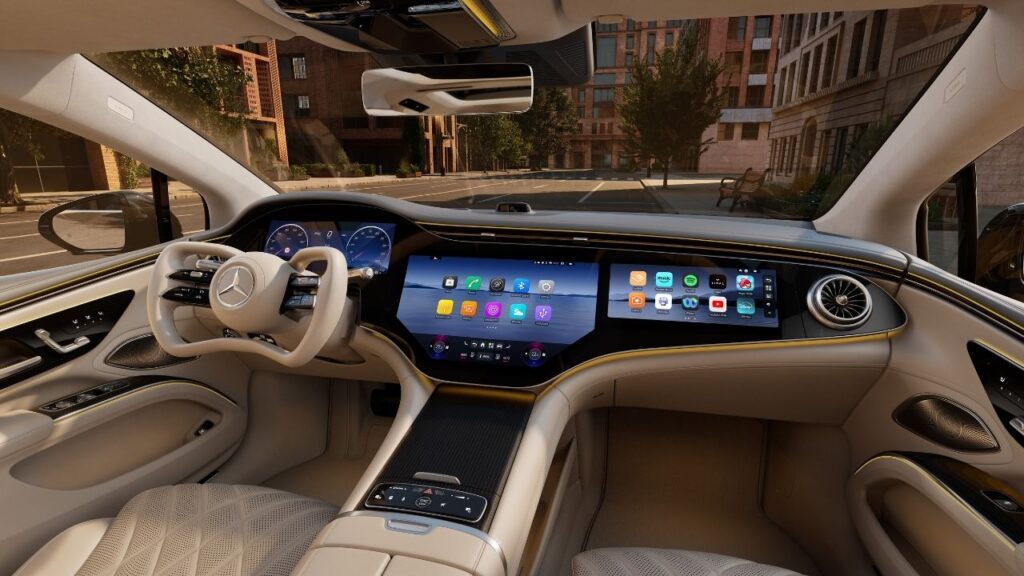
- Customizable Feel: The steering ratio can be adjusted to suit the driving situation. It makes city manoeuvres effortless while maintaining high-speed stability.
- Vibration Elimination: Unpleasant road vibrations are filtered out electronically, though intuitive feedback is maintained for the driver.
- Redundant Architecture: To meet stringent safety standards. The system uses a dual-signal path and a water-cooled supercomputer to ensure steering capability is never compromised.
MB.OS and AI Integration
The EQS serves as the launchpad for the Mercedes-Benz Operating System (MB.OS). This proprietary “supercomputer” architecture integrates every aspect of the vehicle, from drivetrain control to the infotainment experience.
- MBUX Virtual Assistant: Powered by generative AI (including ChatGPT-4o and Google Gemini). The assistant can engage in complex dialogues and utilise three different avatars (Star, Human-like, and “LittleBenz”) for personalised interaction.
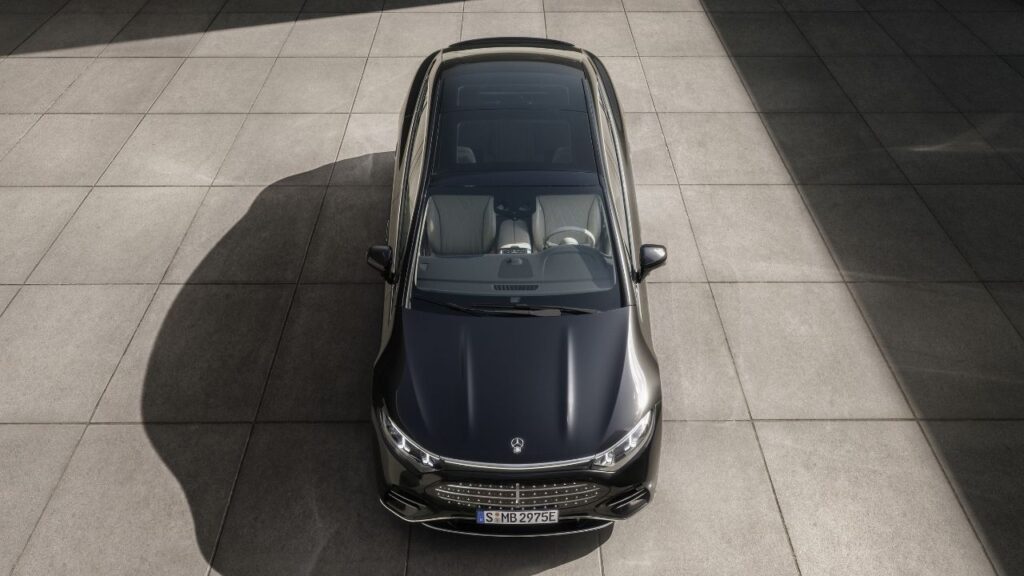
- MBUX Hyperscreen: The 55-inch glass surface remains standard. It now featuring the Zero Layer interface with an AI-driven custom footer bar that suggests apps based on context.
- MBUX Surround Navigation: The driver’s display now offers a real-time 3D map using a game engine to show other road users (cyclists, pedestrians, cars) as the car sees them.
Comfort and “Welcome Home” Luxury
The interior has been refined with new materials and innovative comfort features designed to create a sense of belonging.
- Seat-Belt Heating: An industry-first feature for the front seats. Where integrated heating wires warm the webbing to 44°C, allowing passengers to remove thick winter jackets for a snugger, safer fit.
- Intelligent Damper Control: Using Car-to-X cloud data, the AIRMATIC suspension receives information about upcoming speed bumps from other Mercedes-Benz vehicles. The dampers adjust electronically just before the impact to “glide” over the obstacle.
- HEPA Filtration: The ENERGIZING AIR CONTROL Plus system uses a massive HEPA filter under the bonnet to keep out 99.65% of particles. This includes pollen and fine dust for pure breathing air.
Bidirectional Charging: Vehicle-to-Grid
The new EQS transitions from a consumer of energy to a supplier. Through an upcoming over-the-air update, the vehicle will support bidirectional charging. This allows it to feed power back into the public grid (V2G). It can also power a private home (V2H) during outages or peak pricing.